From Order to Installation: Penmarc’s Proven, Reliable Expertise
A customer places an order and expects it in their home within days, not weeks. A retailer launches a new product line and needs installations running in every market before the marketing push even finishes airing.
The gap between “order placed” and “job complete” keeps getting smaller. Most installer networks aren’t built to keep up with that.
Penmarc is.
According to AmplifAI’s 2026 customer service research, 88% of customers now expect faster response times than they did just last year, and most will walk away from a brand after just one unresolved issue.
That pressure lands squarely on the installer. For eight years, closing that gap without cutting corners has been the entire premise behind Penmarc Inspired Spaces.
What is Expedited Installation Service?
Expedited installation service is a coordinated process, spanning scheduling, communication, and on-site execution, that compresses the time between order placement and completed installation without sacrificing quality or the customer’s experience along the way.
It’s the difference between a rushed job that feels rushed, and a fast job that still feels like Penmarc Perfection.

Why Are Order-to-Install Windows Shrinking?
Customer patience has changed faster than most installer networks have. AmplifAI’s 2026 customer service research found that 85% of customer experience leaders say customers will leave a brand entirely after a single unresolved issue, and speed of response has become a baseline expectation rather than a bonus.
That doesn’t mean every customer wants a self-service app. It means they want to reach a real person fast, get a clear answer, and know someone is watching their job from start to finish.
Retailers feel this pull from both sides. Their customers want an immediate, human response. But the retailer still needs weeks of lead time to line up crews, materials, and logistics across every region.
Penmarc Inspired Spaces was built to close that gap with a live, in-house scheduling team, not an app, on the belief that speed and personal accountability don’t have to compete.
What Breaks Down When an Installer Network Can’t Keep Up?
A tight timeline exposes cracks that a slower schedule can hide.
Research from Buildbite found that 85% of construction and installation professionals said job delays had hurt their work, usually because no one was tracking progress across the field in real time.
Picture a national product rollout with a two-week install window.
A crew in one region gets pulled onto a bigger job. Another loses a team member and doesn’t say anything until appointment day.
With no shared scheduling system and no one person accountable, small delays stack up fast. The brand takes the blame, even though it never touched a single job site.
Here’s what that scenario usually looks like on the ground:
- A missed appointment with no heads-up to the customer
- A rescheduled job that pushes into the next crew’s slot, compounding the delay
- No dispatcher watching the full picture across every market at once
- A customer who blames the brand on the box, not the installer who showed up late
How Does Real-Time Visibility Keep a Rushed Timeline From Slipping Further?
Speed under pressure comes down to one thing: catching problems the moment they happen, not after the appointment is already missed.
Workstatus’s 2026 analysis found that real-time tracking cuts timeline slips by nearly 30%, simply because managers can act right away instead of finding out days later.
That’s exactly what Cruxos does inside Penmarc’s process.
Every installer checks in and out through the platform. Every job updates in real time. Any delay reaches the scheduling team immediately, not the customer first.
Pair that early warning with a workforce trained to catch small issues before they turn into callbacks, and a fast job stays fast.
How Does Penmarc’s Scheduling Team Compress the Order-to-Install Timeline?
Technology alone doesn’t speed anything up. People do.
Penmarc’s in-house scheduling services team handles every customer contact directly, from the first call after an order comes in through final confirmation. Retailers never have to manage the patchwork of independent contractors running their own calendars.
That matters because the relationship doesn’t end at the install.
Gitnux’s 2026 home service industry report found that repeat customers already make up 60% of home service revenue, and the average customer expects a rating of 4.7 stars or better before they’ll trust anyone with their home. A rushed, unclear, or unprofessional appointment doesn’t earn that repeat business. A tight timeline handled by one accountable team does.
Penmarc’s scheduling team, field installers, and Cruxos platform all run inside the same system, under the same Spirit of Excellence.
That means a compressed installation window gets the same care and attention to detail as any other job. Nothing gets lost between disconnected parties who’ve never spoken to each other.
What Makes Penmarc the Right Partner When Timing Is Tight?
A fast installation only works if the company behind it was built for speed and accountability from the start. Here’s what sets Penmarc apart:
- RRP-certified installers nationwide, held to one standard of craftsmanship, so a tight window never means settling for whoever’s available
- Cruxos, giving the scheduling team and the client real-time visibility into every job, from confirmation to completion photos
- An in-house scheduling department that talks to every customer directly, instead of routing through disconnected regional crews
- Nationwide bench strength across the continental United States, so a surge in one region never stalls a rollout everywhere else
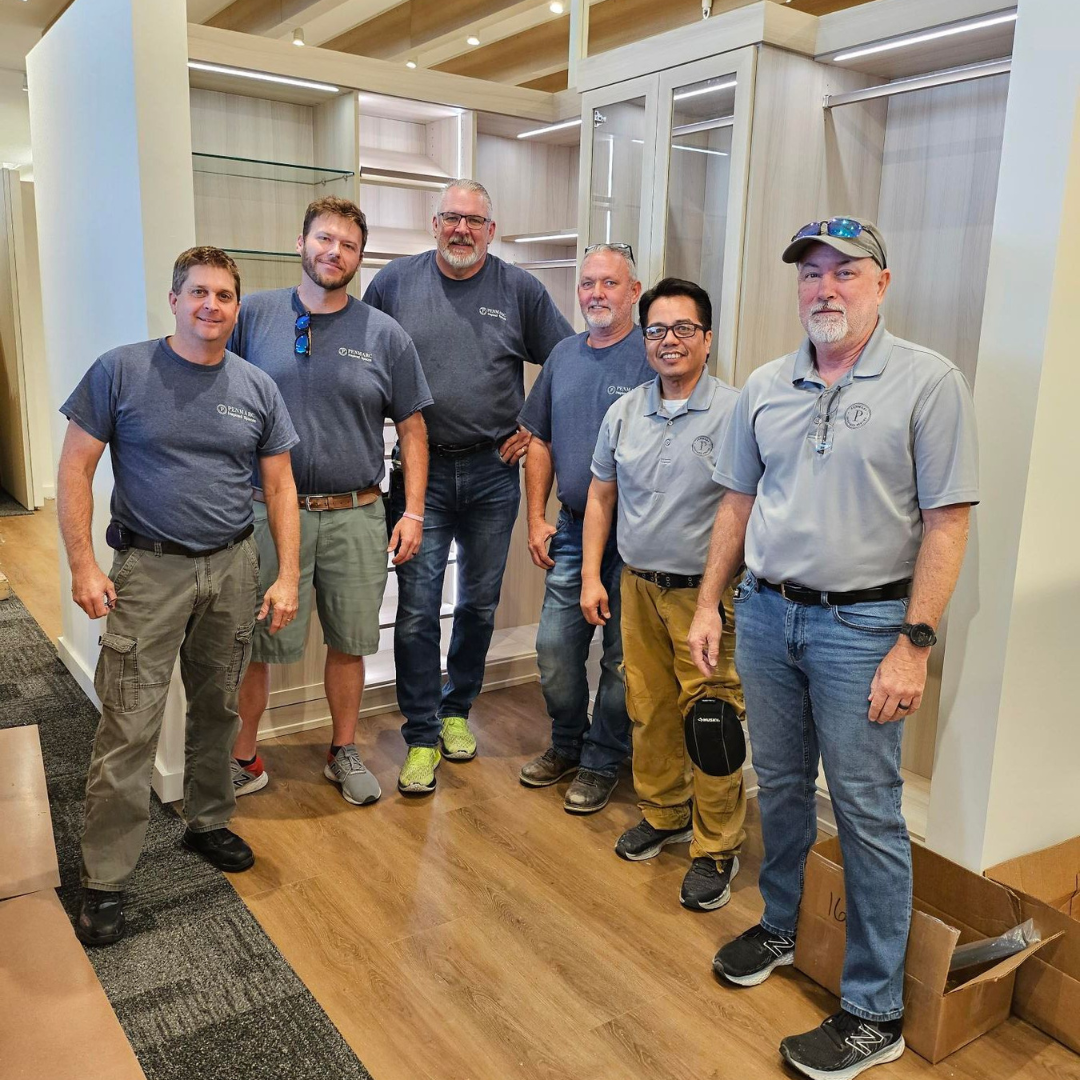
That’s Penmarc under pressure: the same craftsmanship, the same communication, the same accountable culture, whether the job was booked six weeks out or six days out.
Frequently Asked Questions
How Fast Can a Third-Party Installer Realistically Turn Around an Order?
It depends on the product, the region, and crew availability. But a nationwide installer with an in-house scheduling team and real-time tracking, like Penmarc, can typically move much faster than a fragmented network of independent subcontractors.
Does a Faster Installation Timeline Mean Lower Quality Work?
Not with the right installer. Speed only becomes a risk when a network relies on whoever happens to be free that week, instead of a certified workforce held to the same standard on every job, fast or not.
What Role Does Scheduling Play in Keeping a Tight Timeline on Track?
It’s often the deciding factor. One in-house team coordinating every appointment can catch conflicts and rebook quickly. A patchwork of independent crews has no shared system to stop those same conflicts from piling up.
How Does Technology Like Cruxos Help When Installation Windows Are Short?
It surfaces delays the moment they happen, giving the scheduling team time to adjust before a short window closes. Without it, most teams don’t find out about a problem until the appointment’s already been missed.
What Should a Retailer Look for in an Installation Partner for Time-Sensitive Rollouts?
An employed, certified workforce held to one standard. An in-house scheduling team that talks to customers directly. Real-time visibility into every job. All under one company, not several disconnected ones.
Give Your Customers a Fast Installation That Feels Like Penmarc Perfection
Tight timelines aren’t going away, and customers aren’t getting more patient.
Penmarc Inspired Spacesgives national brands one accountable team, one scheduling department, and one real-time platform, backed by a workforce that treats attention to detail as non-negotiable.
A fast turnaround never has to cost you quality.